Home / Tuscan Leather
Tuscan Leather Bags and Florentine Craft
Florence’s leatherworking tradition
Leatherworking has long been part of Florence’s craft economy. The city’s reputation in handbags and small leather goods rests on practical skills such as pattern cutting, assembly, stitching and finishing, applied to both classic forms and contemporary designs.
Read more at Italia.it and Destination Florence.
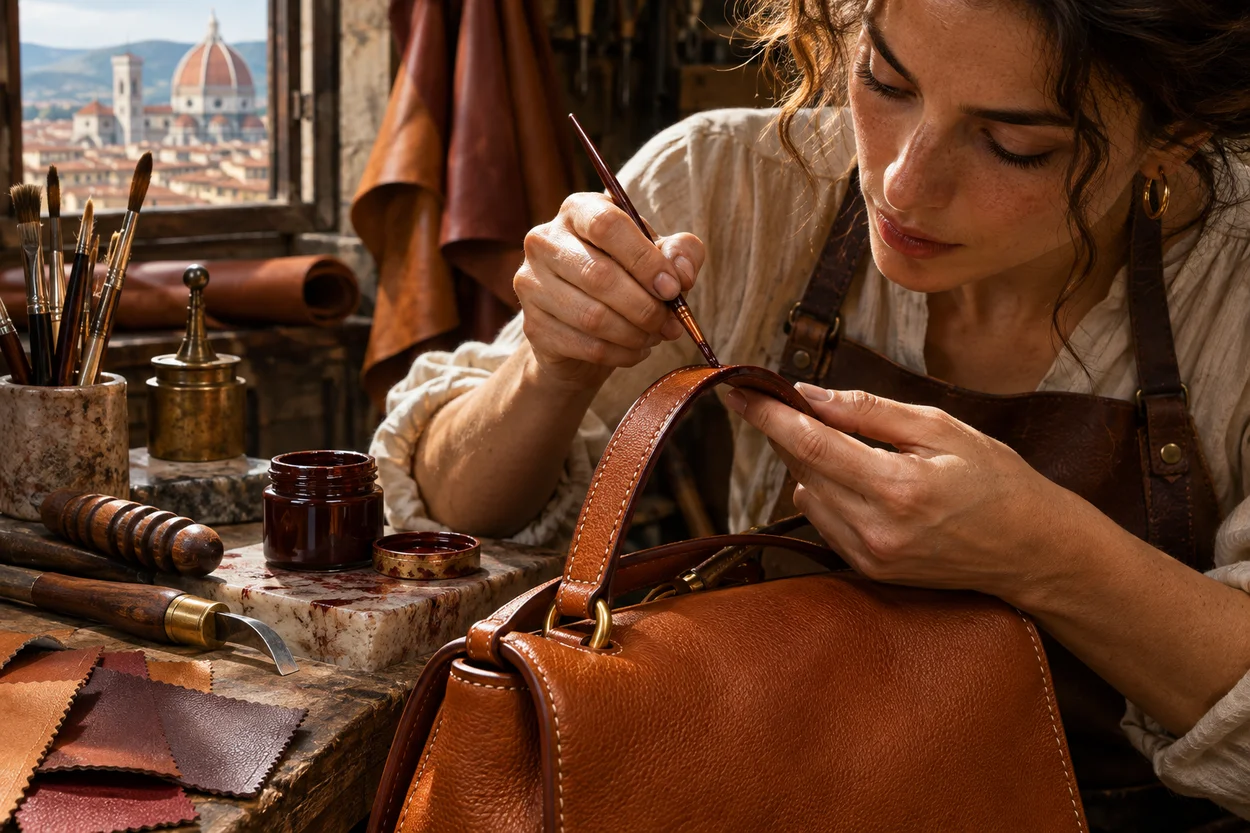
What buyers mean by classic Tuscan cuoio
Buyers often use cuoio to describe the firm, substantial leather seen in classic Tuscan bags. Cognac and chestnut tones, a burnished finish, sturdy handles and visible stitching are common design cues. Ask the supplier for the precise leather type, tannage and tannery origin if these details are part of your brief. Natural variation and patina depend on the leather and its finish.
What to ask about origin and workmanship
Separate the location of the workshop, where the bag is made, the source of the leather and where components are produced. Request documentation for the origin claims you plan to use and ask which operations are performed by hand. Review a production sample for handle reinforcement, edge consistency, hardware function and lining construction.
Find Italian leather bag suppliers or specify Tuscany in your sourcing request.